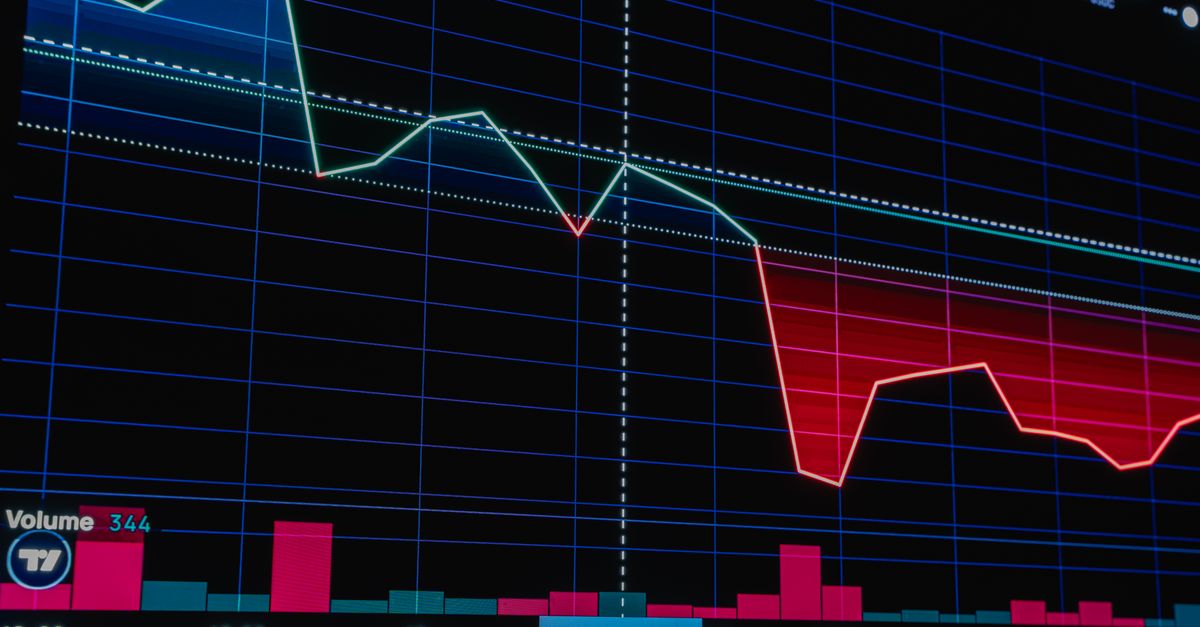
AI Stock Market Rout: What the $2.5 Trillion Wipe‑Out Means for Pakistani Investors
The past two weeks have seen a dramatic reversal in the hype‑driven rally that lifted artificial‑intelligence (AI) stocks to record highs. Across the United States, China, and South Korea, investors have collectively erased more than $2.5 trillion in market value, prompting a wave of caution that is now reaching emerging markets, including Pakistan. For local investors, the fallout raises three immediate questions:
- How deep is the global correction?
- Which sectors and companies are most exposed?
- What steps can Pakistani investors take to safeguard their portfolios?
Below we break down the numbers, the underlying reasons, and the practical actions you can consider.
1. The Global AI Sell‑Off in Numbers
| Region | Approx. Market Value Lost | Key Drivers |
|---|---|---|
| United States | $1.8 trillion (mainly tech & AI) | Disappointing earnings from AI‑heavy firms, rising financing costs, and a shift in investor sentiment. |
| China | $480 billion wiped from the STAR‑50 AI index; broader market down $2.4 trillion since May | Slowing profit growth, regulatory scrutiny, and doubts over AI profitability. |
| South Korea | ~5 % drop in KOSPI, with AI‑linked chips contributing heavily | Heavy weighting of Samsung and SK Hynix in the index magnifies the impact. |
| Global aggregate (reported) | Roughly $2.5 trillion | Combined effect of the above regions and a synchronized pull‑back in semiconductor stocks. |
These figures come from reputable outlets such as The New York Times, CNBC, AP News, and regional financial reporting. The consensus is that the rout is not a one‑day crash but a correction that has unfolded over several weeks, driven by a reassessment of AI‑related growth expectations.
2. Why the AI Rally Crumbled
- Earnings Gap: Companies that spent billions on AI data‑centres, custom chips, and cloud services have not yet delivered the revenue surge analysts projected. Recent quarterly reports showed growth slowing from near‑100 % in 2026 to around 30 % for AI‑focused firms in 2027.
- Valuation Reset: Many AI stocks were trading at price‑to‑earnings multiples well above historic averages. As earnings forecasts were trimmed, the market forced a price correction.
- Macro Pressures: Persistent inflation, a still‑elevated Federal Reserve policy rate, and geopolitical uncertainty (e.g., tensions in the Taiwan Strait) have reduced risk appetite.
- Sector Concentration: In markets like South Korea, a handful of semiconductor giants dominate the index, so any weakness in those names quickly drags the broader market down.
- Investor Fatigue: After months of rapid price appreciation, a wave of profit‑taking is natural. The speed of the recent decline simply amplified the sentiment shift.
3. Ripple Effects for Pakistani Investors
3.1 Direct Exposure
Pakistani investors typically hold AI‑related exposure through three channels:
- U.S. ADRs and ETFs – Popular funds such as the Global X AI & Technology ETF (AIQ) or the Invesco QQQ include many of the high‑profile AI names.
- Local Brokerage Accounts – Some brokers allow direct purchase of U.S. listed AI stocks (e.g., Nvidia, Microsoft, Alphabet).
- Domestic Tech‑Heavy Companies – Firms like Systems Limited and Netsol have begun integrating AI services, making them indirectly linked to the global AI narrative.
If any of these holdings represent a material portion of a portfolio, the recent sell‑off could have already reduced portfolio value by 5‑15 %.
3.2 Indirect Exposure
- Currency Impact: A broad equity sell‑off often leads to capital outflows from emerging markets, putting downward pressure on the Pakistani rupee (PKR). A weaker PKR can raise the cost of imported technology and increase inflation.
- Commodity Correlation: Some investors rotate into safe‑haven assets such as gold and oil. Higher oil prices can raise Pakistan’s import bill, further straining the current account.
- Credit Markets: Global risk aversion can tighten financing conditions for Pakistani corporates, especially those with dollar‑denominated debt.
4. What Pakistani Investors Can Do Right Now
4.1 Review Portfolio Concentration
- Identify AI‑linked holdings – List all U.S. AI stocks, ETFs, and domestic firms with significant AI revenue.
- Measure weight – If AI exposure exceeds 10‑15 % of total assets, consider rebalancing.
4.2 Diversify Across Sectors and Geographies
- Shift toward defensive sectors – Consumer staples, utilities, and healthcare have historically shown resilience during tech corrections.
- Add regional diversification – Consider exposure to stable markets such as the EU or Japan, which have not been as heavily impacted by the AI sell‑off.
4.3 Use Risk‑Management Tools
- Stop‑loss orders – Set realistic thresholds (e.g., 8‑12 % below current price) to limit downside on volatile AI stocks.
- Options hedging – For sophisticated investors, buying protective puts on major AI ETFs can provide a safety net.
4.4 Re‑evaluate Growth Expectations
- Adjust earnings assumptions – Reduce the projected AI‑related earnings growth to the 30 % range for 2027, as analysts now suggest.
- Focus on profitability – Prioritize companies that have already demonstrated positive cash flow from AI products rather than those still in the “investment” phase.
4.5 Keep an Eye on Safe‑Haven Trends
- Gold – Historically, gold has benefited from risk‑off sentiment. A modest allocation (5‑10 % of portfolio) can act as a buffer.
- High‑quality bonds – Pakistani government bonds with stable yields can provide income while the equity market stabilizes.
5. Broader Economic Implications for Pakistan
- Export Competitiveness – A weaker PKR may make Pakistani IT services more price‑competitive abroad, potentially offsetting some investor losses.
- FDI Flow – Global investors may become more cautious about committing fresh capital to emerging‑market tech hubs, slowing foreign direct investment in Pakistan’s burgeoning startup ecosystem.
- Policy Response – The State Bank of Pakistan could intervene to stabilize the rupee if capital outflows intensify, possibly by tightening monetary policy or using foreign exchange reserves.
- Infrastructure Investment – The slowdown in AI‑related capital spending abroad may free up financing for domestic digital transformation projects, provided the government prioritises them.
6. Actionable Checklist for the Average Pakistani Investor
- Step 1: List all AI‑linked assets (stocks, ETFs, mutual funds).
- Step 2: Calculate their combined weight in your portfolio.
- Step 3: If weight > 15 %, sell a portion to bring exposure down to 8‑10 %.
- Step 4: Allocate the proceeds to a mix of defensive equities, government bonds, and a small gold position.
- Step 5: Set stop‑loss orders on the remaining AI holdings.
- Step 6: Review your risk tolerance and adjust your overall asset allocation if needed.
- Step 7: Stay informed – monitor quarterly earnings of AI firms and macro‑economic indicators (interest rates, PKR exchange rate, oil prices).
Conclusion
The $2.5 trillion AI market rout is a stark reminder that even the most hyped sectors can experience rapid corrections. For Pakistani investors, the key take‑aways are to recognise exposure, diversify prudently, and use risk‑management tools. While the global sell‑off creates short‑term pain, it also opens opportunities for disciplined investors to reposition for the next growth cycle. By staying informed and acting deliberately, you can protect your wealth and potentially benefit from the market’s eventual stabilization.
Disclaimer: This article is for informational purposes only and does not constitute financial advice. Investors should consult a qualified financial professional before making any investment decisions.