India’s New Vande Bharat Sleeper: Features, Fares and the Drive to Export to Europe and the US
KM Afaq ·
India’s New Vande Bharat Sleeper: Features, Fares and the Drive to Export to Europe and the US — Explore the Vande Bharat sleeper’s features, fares and dinner menu, plus India's plans to export the train to Europe and the US.
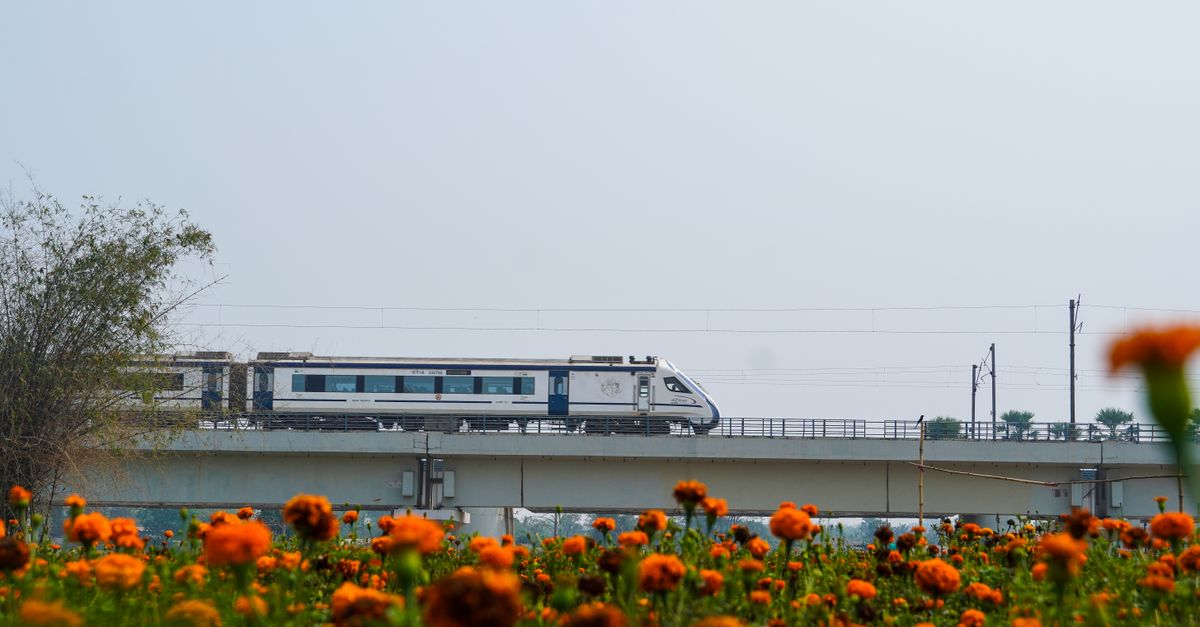
About India’s New Vande Bharat Sleeper: Features, Fares and the Drive to Export to Europe and the US
Introduction
India’s semi‑high‑speed rail programme has taken another step forward with the introduction of a Vande Bharat sleeper service on the Varanasi‑New Delhi corridor. The train promises modern interiors, a tiered fare system and even a curated dinner menu. At the same time, the Ministry of Railways is actively promoting the Vande Bharat platform for export, citing interest from France, Germany and the United States. This article analyses the sleeper’s practical features, the fare structure announced for the Varanasi‑Delhi run, the broader manufacturing ecosystem, and the challenges and opportunities of exporting a train that was conceived for Indian conditions.
What makes the Vande Bharat sleeper different?
| Feature | Detail |
|---|---|
| Coach configuration | 16‑coach trainset, with 12 sleeper coaches and 4 service coaches (including pantry and luggage). |
| Seating/berth layout | Reclining berths with individual reading lights, USB charging ports and privacy curtains. |
| Air‑conditioning | Centralised climate control tuned for Indian summer temperatures. |
| On‑board Wi‑Fi | Limited‑bandwidth internet for browsing and ticket‑related services. |
| Safety systems | Automatic Train Protection (ATP) and fire‑safety‑qualified interior panels supplied by Kineco Limited. |
| Catering | Fixed dinner menu released by the railway for the Varanasi‑Delhi route (see section below). |
The sleeper version retains the Vande Bharat’s self‑propelled, electric multiple‑unit (EMU) architecture, meaning it can accelerate to 130 km/h without a separate locomotive. This reduces turnaround time at terminals and improves punctuality.
Passenger reaction so far
A viral social‑media post highlighted a passenger’s frustration with the initial announcement that the sleeper would lack certain amenities. The user wrote, “If the railway fixes this, then I will travel again,” reflecting a broader concern that the first‑run interiors were not fully ready. Subsequent inspections at the Bilaspur maintenance depot (conducted by SECR General Manager Tarun Prakash on 31 Oct 2026) confirmed that automated cleaning and diagnostic systems are now operational, easing many of those early doubts.
Key take‑aways from passenger feedback:
- Comfort expectations: Travelers expect the same level of comfort as the day‑time Vande Bharat Express, especially regarding berth spacing and noise insulation.
- Catering quality: The dinner menu is being watched closely; any lapses could quickly become a headline.
- Reliability: The EMU’s acceleration is praised, but punctuality will be the ultimate test on a route that mixes high‑speed sections with conventional tracks.
Fare structure and dinner menu for the Varanasi‑New Delhi sleeper
The railway has released a tiered fare schedule for the 815 km journey:
- Executive Sleeper (2‑berth cabin) – INR 4,500 per passenger
- First Class Sleeper (4‑berth cabin) – INR 3,200 per passenger
- Second Class Sleeper (6‑berth open bay) – INR 2,100 per passenger
All fares include a mandatory catering charge of INR 250, which covers the dinner menu. The menu, published by Jagran, offers the following items (portion sizes are standardised across classes):
- Main course – Butter chicken or paneer tikka masala (200 g)
- Side – Basmati rice (150 g) and mixed vegetable sabzi (100 g)
- Bread – Garlic naan (1 piece)
- Dessert – Gulab jamun (2 pieces)
- Beverage – Packaged water (500 ml) and a choice of tea or coffee
The fixed‑price model simplifies ticketing and reduces on‑board ordering errors. However, passengers have noted that the catering charge is non‑refundable, even if a traveler skips the meal, a policy that may need revisiting as the service scales.
The manufacturing ecosystem behind the sleeper
The sleeper’s interior components are being supplied by Kineco Limited, which announced in May 2026 an order book exceeding ₹3,000 crore for interior systems across 100 Vande Bharat sleeper trains. The contract covers:
- Fire‑rated seat frames and berth cushions
- Anti‑microbial flooring panels
- Modular pantry equipment
- LED lighting with ambient colour control
Kineco’s involvement illustrates how the Vande Bharat platform is creating a domestic supply chain that can meet international safety standards (e.g., EN 45545 for fire safety). This domestic capability is a key argument the Ministry of Railways uses when pitching the train to foreign buyers.
Export ambitions: Europe and the United States
Railway Minister Ashwini Vaishnaw announced on 2 Nov 2026 that India will start exporting Vande Bharat trainsets “in the next few years.” The target markets are:
- France – interest in a 200 km/h semi‑high‑speed commuter set for regional lines.
- Germany – potential partnership for a mixed‑traffic EMU that can operate on both electrified and diesel‑only corridors.
- United States – discussions with Wabtec Corporation, which received equipment‑supply orders worth Rs 839 crore for Vande Bharat sleeper trains.
Why Europe and the US?
- Interoperability – The Vande Bharat’s modular traction system can be adapted to different voltage standards (25 kV AC, 15 kV AC, 3 kV DC). This flexibility is attractive for European networks that still operate mixed electrification.
- Speed vs. cost – At 130 km/h, the train fills a niche between conventional commuter EMUs (80‑100 km/h) and true high‑speed trains (250 km/h+). For many secondary corridors, this offers a cost‑effective upgrade.
- Made‑in‑India branding – Exporting a domestically designed and built train aligns with India’s “Make in India” narrative and can open doors for ancillary components (interiors, signalling, maintenance tools).
Export hurdles
- Certification – European rail safety agencies (e.g., ERA, TSI) require rigorous testing for crashworthiness, fire safety and electromagnetic compatibility. While Kineco’s interiors meet fire‑safety standards, full‑train certification will need additional time.
- Supply‑chain localisation – The US market often prefers local content to qualify for federal funding. Wabtec’s involvement suggests a hybrid model where critical subsystems (brakes, HVAC) are sourced domestically.
- Political risk – Export timelines may be affected by trade policy shifts, especially if protectionist measures arise in target countries.
Practical implications for Indian travellers
- Improved comfort on long journeys – The sleeper’s recline angle and privacy curtains make overnight travel more restful compared with conventional AC coaches.
- Predictable pricing – Fixed fares and a set catering charge simplify budgeting, though the non‑refundable catering fee could be a pain point for occasional travellers.
- Potential for expansion – If the Varanasi‑Delhi sleeper proves popular, the Ministry plans to roll out similar services on other high‑traffic routes (e.g., Chennai‑Bengaluru, Mumbai‑Pune).
Actionable next steps for stakeholders
- Railway authorities should monitor on‑board feedback during the first three months and be ready to adjust the catering policy or berth spacing based on passenger density data.
- Kineco and other interior suppliers need to complete fire‑safety certification for export markets by Q2 2027 to keep export timelines realistic.
- Potential foreign buyers are advised to request a dual‑certification test report (Indian and European/US standards) before signing procurement contracts.
- Travel agents and online ticket platforms must update their systems to display the new fare tiers and the mandatory catering charge clearly, reducing post‑booking confusion.
Conclusion
The launch of the Vande Bharat sleeper marks a significant upgrade for long‑distance rail travel in India, offering modern comforts, a transparent fare structure and a curated dinner menu. At the same time, the government’s export push—backed by domestic manufacturers like Kineco and strategic partners such as Wabtec—positions the train as a competitive product for Europe and the United States. Success will hinge on meeting stringent safety certifications, fine‑tuning passenger services, and navigating the geopolitical nuances of international rail procurement. If these challenges are managed well, the Vande Bharat could become a flagship example of Indian engineering on the global stage.
Original source or publisher — consult this source for current information.